


Garden Horizons: How to Design the Most Profitable Garden Layout
22.03.2026 - 12:34:03
Game Guides , Roblox
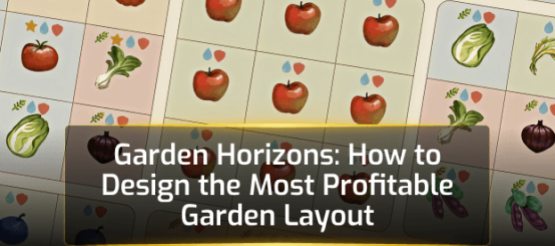

For most players, Garden Horizons is mainly about getting as many crops as possible but that's not true. If you want to truly succeed in the game, you'll need a good layout as well.
On this guide, we're going to talk about the most profitable garden layouts in Garden Horizons so that you don't have to go blindly when building your own garden. If you need a little capital to get yourself going, we've got great deals on Garden Horizons Robux at RPG Stash as well!
Principles of Profitable Garden Layouts
If you want your garden to actually make money and not just look pretty, you need to think like a strategist, not a hobbyist. A profitable garden layout is about squeezing the most value out of every tile while keeping your workflow smooth and repeatable.
Optimal spacing and placement for crops
Spacing is where most players quietly lose profit. Packing crops tightly feels efficient, but overcrowding can reduce mutation chances and slow down harvesting cycles.
You want a layout where:
- Each crop has enough adjacency to interact with others
- Paths are clean so you can harvest quickly
- No tile sits idle unless it serves a purpose
Here is a simple spacing comparison:
Layout Type | Description | Profit Impact |
Tight Grid | Crops placed side by side | Medium |
Patterned Grid | Alternating crop types | High |
Spaced Clusters | Small groups with gaps | Very High |
Patterned grids tend to win because they allow interaction without choking growth potential.
How mutations and crop interactions affect output
Mutations are where the real money is hiding. Most players ignore them or treat them like a bonus, but you should be designing your entire garden around triggering them.
Mutations usually happen when:
- Specific crops are placed adjacent to each other
- Growth cycles overlap
- Certain environmental or seasonal conditions are met
Think of it like this. A basic crop might give you steady income, but a mutated version can double or triple its value. That is not a bonus. That is your main strategy.
For example:
Crop A | Crop B | Mutation Result | Value Multiplier |
Berry | Flower | Hybrid Fruit | 2x |
Root | Herb | Enriched Root | 1.8x |
Grain | Fruit | Golden Grain | 2.5x |
The key is consistency. One mutation is luck. Repeated mutations are layout design.
Balancing growth speed, value, and harvest cycles
Fast crops give quick cash but lower value. Slow crops give big payouts but tie up space. The sweet spot is mixing both so your income never stalls.
You want three layers in your garden:
- Fast crops for steady income
- Medium crops for consistent upgrades
- High-value crops for big profit spikes
Here is a simple breakdown:
Crop Type | Growth Time | Value | Role |
Fast | Short | Low | Cash flow |
Medium | Moderate | Mid | Stability |
High Value | Long | High | Profit spikes |
If your entire garden is slow crops, you are broke while waiting. If everything is fast, you are working harder for less reward. Balance is where profit lives.
Crop Combinations and Mutation Optimization
This is where things start to feel like a puzzle. You are no longer just planting crops, you are engineering outcomes.
Recommended high-profit crop pairings
Some combinations consistently outperform others. These are the ones you should prioritize early and scale later.
Combo Name | Crops Used | Result | Profit Rating |
Sweet Hybrid | Berry + Flower | Hybrid Fruit | High |
Golden Mix | Grain + Fruit | Golden Grain | Very High |
Herbal Boost | Herb + Root | Enriched Root | Medium High |
Premium Blend | Flower + Fruit | Rare Bloom | Very High |
Golden Mix and Premium Blend are usually your late-game money makers.
Strategies to trigger mutations for rare or high-value crops
You do not just throw crops together and hope. You control the setup.
Use these strategies:
- Place trigger crops in alternating patterns
- Sync planting times so they mature together
- Avoid isolating mutation-dependent crops
A simple pattern example:
B F B
F B F
B F B
- B = Berry
- F = Flower
This layout maximizes adjacency and increases mutation chances across the grid.
Another trick is timing. If Crop A matures faster than Crop B, plant Crop B first so they overlap during the mutation window.
Tips to maintain efficiency without wasting space
Efficiency is not just about filling tiles. It is about making every tile contribute to profit.
Avoid:
- Dead tiles with no interaction
- Long walking paths
- Single-crop blocks with no synergy
Instead:
- Use compact patterns
- Rotate crops after harvest
- Keep pathways minimal and intentional
A good rule is this. If a tile is not helping a mutation or producing value, it should not exist.
Layout Examples
Let's break down practical layouts you can actually use.
Small garden layout
When space is tight, every tile matters more.
B F B
F B F
B F B
Why this works:
- Maximum adjacency for mutations
- No wasted tiles
- Easy to manage and harvest
Feature | Benefit |
Alternating crops | High mutation rate |
Compact design | Fast harvesting |
Balanced mix | Stable income |
This is your go-to early-game profit engine.
Medium garden layout
Now you can start layering strategies.
B F B F B
F G F G F
B F B F B
F G F G F
B F B F B
- B = Berry
- F = Flower
- G = Grain
Why this works:
- Introduces high-value Grain combos
- Maintains mutation density
- Expands profit potential
Feature | Benefit |
Multi-crop layering | Higher mutation diversity |
Expanded grid | More total output |
Controlled spacing | Efficient harvesting |
This layout balances growth speed and value very well.
Large garden layout
This is where optimization really pays off. Divide your garden into zones instead of one giant grid.
Zone example:
Zone 1: Fast Crops
B B B B
B B B B
Zone 2: Mutation Core
F B F B
B F B F
F B F B
B F B F
Zone 3: High Value
G G G G
G G G G
Why this works:
- Dedicated mutation zone increases rare outputs
- Fast zone keeps income flowing
- High-value zone delivers big payouts
Zone Type | Purpose | Profit Impact |
Fast Zone | Constant income | Medium |
Mutation Zone | Rare crop creation | Very High |
Value Zone | Big returns | High |
You are no longer just planting. You are running a production system.
Scaling Your Garden for Maximum Income
As your garden grows, your layout needs to evolve. Copy-pasting your small layout into a large space is one of the biggest mistakes.
How to expand and reorganize layouts as garden grows
Start thinking in modules. A module is a repeatable pattern like your small garden layout. Instead of stretching one grid, duplicate strong patterns across your space.
For example:
- Use multiple mutation cores instead of one large one
- Separate fast and slow crops into dedicated sections
This keeps your system manageable and scalable.
Adjusting crop combinations for larger spaces
Larger space allows specialization.
Shift your strategy:
- Early game: mixed crops everywhere
- Mid game: balanced zones
- Late game: specialized zones
Focus more on high-value combinations as your space increases. You can afford longer growth times because your total output is higher.
Maintaining efficiency while increasing output
More space can actually reduce efficiency if you are not careful.
Watch out for:
- Long travel distances
- Uneven harvest cycles
- Overproduction of low-value crops
Fix this by:
- Keeping layouts symmetrical
- Grouping similar crops together
- Planning harvest routes
Efficiency is not about size. It is about control.
Common Mistakes to Avoid
Even experienced players fall into these traps.
Overcrowding or underutilizing space
Too many crops in one area reduces mutation effectiveness. Too few wastes potential. Find the balance with patterned layouts instead of random placement.
Ignoring high-value crop combinations
If you are only planting basic crops, you are leaving money on the table. Always aim for combinations that can mutate into higher-value outputs.
Failing to optimize mutations or harvest timing
Timing is everything. If crops are not maturing together, you are missing mutation windows. If you harvest too early or too late, you reduce efficiency. Plan your planting like a schedule, not a guess.
FAQ Section
What is the most profitable layout for a small garden?
An alternating grid like Berry and Flower in a 3x3 pattern is one of the most profitable small layouts. It maximizes mutation chances while keeping harvesting simple.
How do crop mutations affect profits?
Mutations significantly increase crop value, often doubling or more. Designing your layout around consistent mutation triggers is one of the fastest ways to boost income.
Which crop combinations generate the highest income?
Combinations like Grain plus Fruit or Flower plus Fruit tend to produce the highest-value mutations. These should be prioritized once you have enough space.
How should I expand my garden efficiently?
Expand using repeatable modules instead of stretching one layout. Divide your garden into zones for fast crops, mutation setups, and high-value production.
Are there layout strategies that work for all garden sizes?
Yes. Patterned grids and modular layouts scale well from small to large gardens. The core idea of maximizing adjacency and minimizing waste stays the same.
How do I balance fast-growing vs high-value crops?
Use fast crops for steady income and high-value crops for larger payouts. A mix ensures you are never stuck waiting without profit.
What are common layout mistakes to avoid?
Overcrowding, ignoring mutations, and poor timing are the biggest issues. Each one directly reduces your overall income.
Can I maximize profits in limited space?
Yes. Small gardens can be extremely profitable if you focus on mutation-heavy layouts and efficient spacing. Quality of layout matters more than size.
How do seasonal crops affect layout planning?
Seasonal crops require flexibility. You should adjust your layout to match available crops while keeping your mutation patterns intact. Swapping crops without changing structure is the key.
Better Layout, Better Profit

A good layout can make a whole world's difference when it comes to how much your character can earn in Garden Horizons. Hopefully, this guide has given you a better idea of what that means. If you need more help with deeper systems in the game, here's a little insight on the game's hidden crop mutation system.