


Diablo 4: Lord of Hatred - How Items Are Changing
29.04.2026 - 08:21:37
Diablo 4 , Game Guides

The core of any ARPG is the items that you can get throughout your journey. The same can be said in Diablo 4, even more so in Lord of Hatred, which is now available on all supported platforms.
Having said that, D4 items have changed in a more profound way in the most recent expansion. If you want to know about the itemization changes in Patch 3.0.1, then read further to learn more.
Overview of the Itemization Changes in Diablo 4: Lord of Hatred
According to the Diablo 4 development team, there are two things that the developers want to accomplish with these itemization changes. The first is that they want to streamline items wherever possible to ensure a smooth experience for both beginners and veterans alike. You can expect that changes were made to stackable items, gems, etc.
The second is that they want items to be more meaningful in a way that can impact endgame builds significantly. That is why you can increase your power by adding tempered affixes to unique items, gain additional bonuses from Talismans, and so much more.
Gear Progression in the Expansion
There are a lot of interesting changes that the developers have implemented in Diablo 4: Lord of Hatred. You can find the most impactful ones below:
Horadric Cube
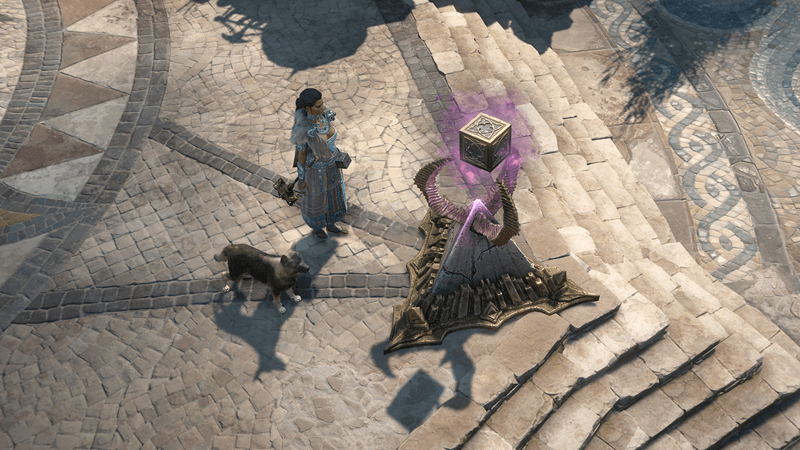
Many fans of the game got excited when Blizzard announced the return of the Horadric Cube in Diablo 4: Lord of Hatred. For those who have not played D2R, this is an item that lets you do a bunch of different things, such as combining items to get a new one, upgrading the quality of the base item, and creating runewords, among many others.
In D4, the Horadric Cube can be utilized to do the following:
- Transfigure an item to grant a random modification.
- Add an affix to an existing item.
- Reroll the affixes of an item (into completely random ones).
- Reroll affixes with a more targeted set of affixes.
- Upgrade rare items into uniques.
- Upgrade rare items into Legendaries.
- Salvage uniques to create the same kind of unique item (with different affixes).
Before you can use the Horadric Cube, however, you need two key items—Dust and Tuning Prisms. The former is a crafting material that’s needed to power up the cube, while the latter narrows down the possible affixes that an item can get. Additionally, Dusts are mandatory, while Tuning Prisms are optional (likely meant for endgame gear only).
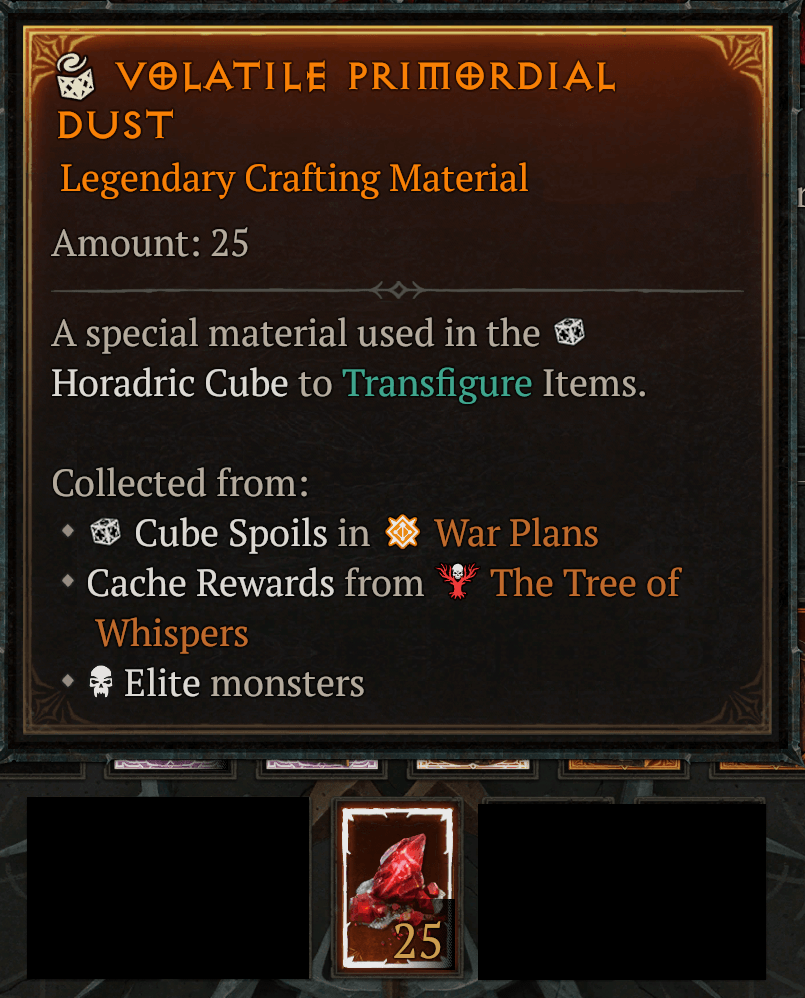
The Volatile Primordial Dust, for example, is a necessary material the Horadric Cube needs if you want to transfigure your items.
Talismans
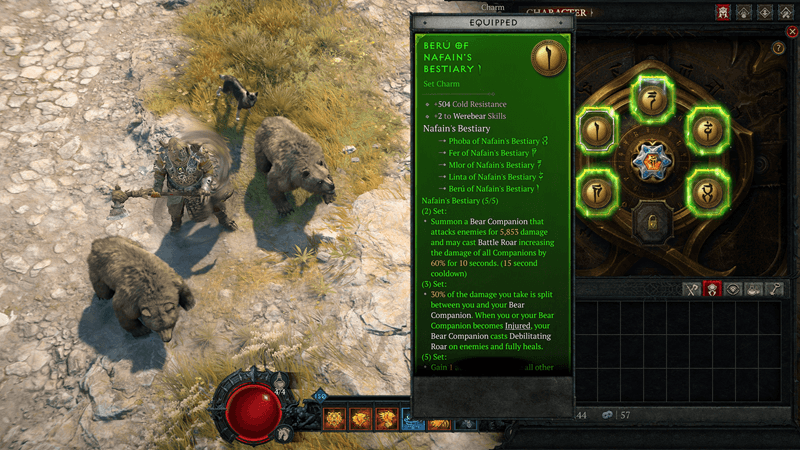
The Talisman System grants more power to your D4 build by providing a group of bonuses that you normally wouldn’t get elsewhere.
Now, this system has two major components. The first is the Seal, which is an item that can give you a number of slots where you can put the Charms. The second is the Charm—the things that actually provide the most meaningful bonuses.
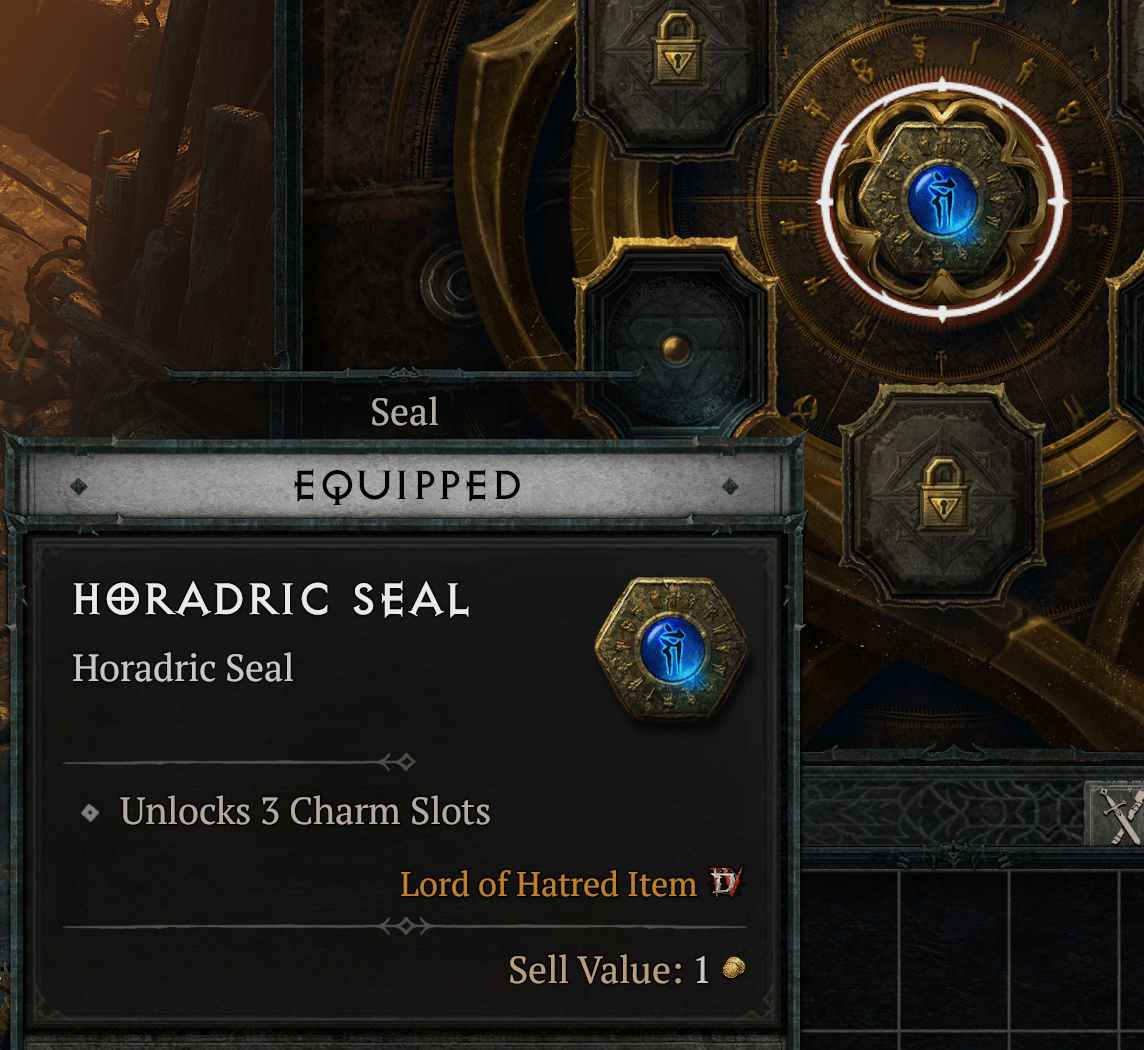
Early on, the types of Charms you’re going to get only provide generic bonuses, such as additional resistance, bonus XP, and + to all skills. However, in the endgame, you will acquire Charms that give bonuses that target your specific class.
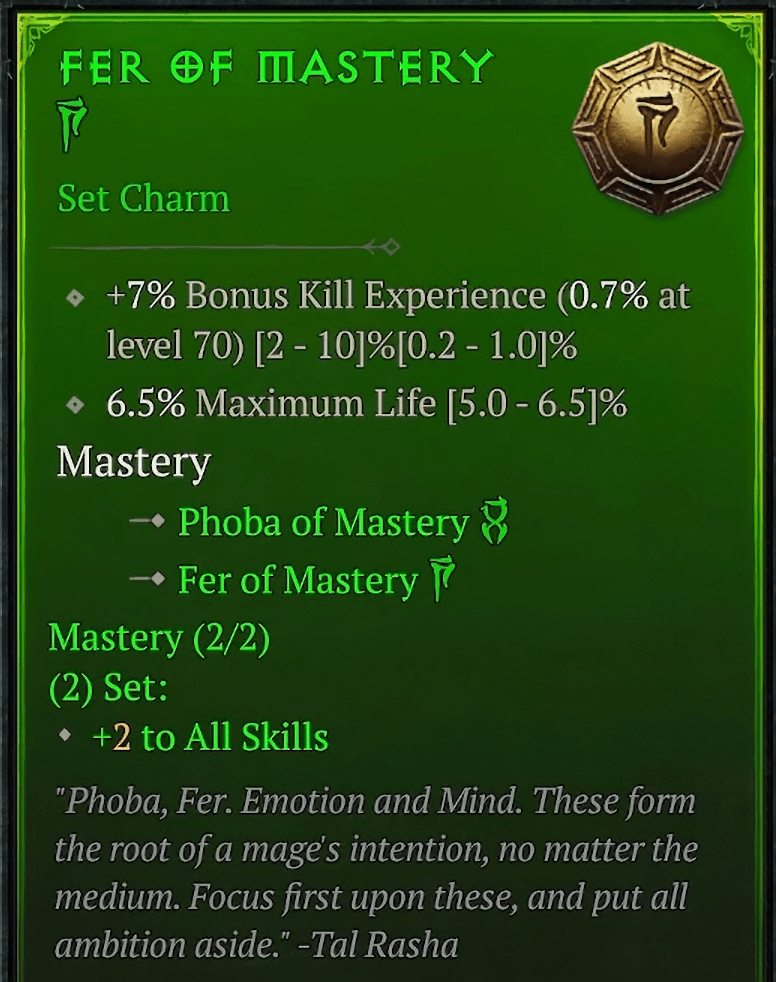
The beauty of the Talisman System is that you can obtain Charms that provide set bonuses, such as the one you see above. This solves the longstanding issue in the previous game, where you had to be forced to wear set items just to avail of powerful bonuses, preventing item diversity (like equipping rares or unique items).
Normal, Magic, and Rare Items
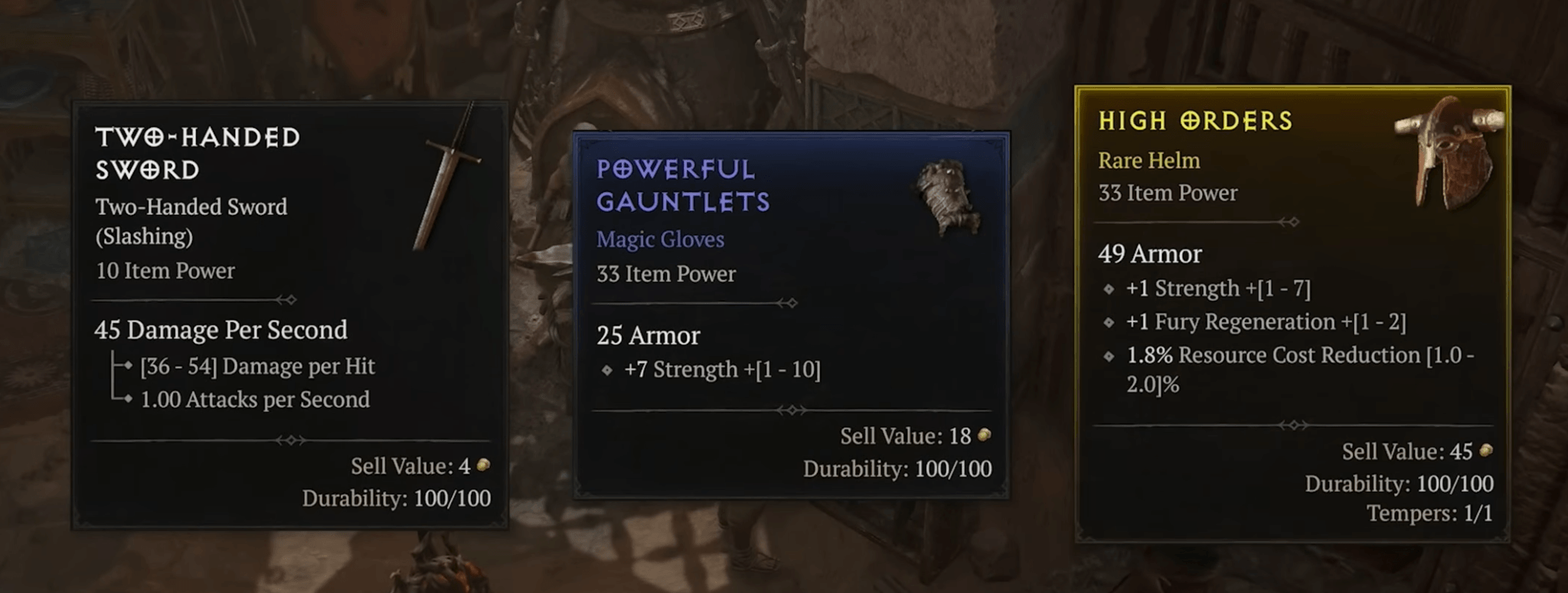
Every tier of item in Diablo 4 has become more meaningful in terms of your early game progression and into the endgame. This is because you can utilize the Horadric Cube to add random affixes in case you don’t have access to Ancestral Legendaries and Mythic Items just yet.
Take note that adding affixes via the Horadric Cube only gives random ones if you’ve only used Dusts to initiate the process. However, you can significantly reduce the number of affixes that can roll onto an item if you have some Tuning Prisms to spare. This is because these Tuning Prisms allow you to select which tempered affix group you want to focus on (such as Offensive, Defensive, Utility, etc).
In addition, rare items can now roll as “Ancestral.” This means that rares can now have a Greater Affix, which dramatically improves the bonuses they provide.
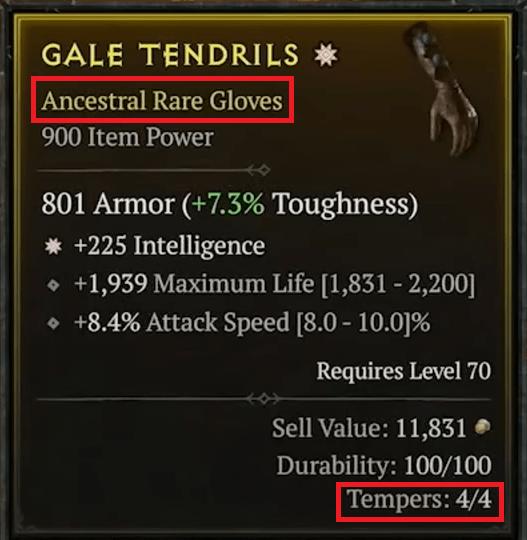
Hovering over an item will now let you see the number of times you can reroll its tempered affix. When that number drops to zero, you need a Scroll of Restoration to increase the item’s reroll count by one per use.
All of this is to say that you should not throw away your normal, magic, and rare items, especially early on. The Horadric Cube is your friend when it comes to improving these things.
Crafting and Item Upgrades
Unique Items
Since its inception, Diablo 4 has always had unique items with a pre-determined set of affixes. Although the individual values of these affixes can be improved through Masterworking, the affixes themselves are set in stone. That has now changed in the Lord of Hatred expansion.
Now, the same unique item can have some affixes that are different. For example, an Azurewrath could roll with a “+ to Maximum Life” affix while another one could get a “+ Life on Hit” instead.
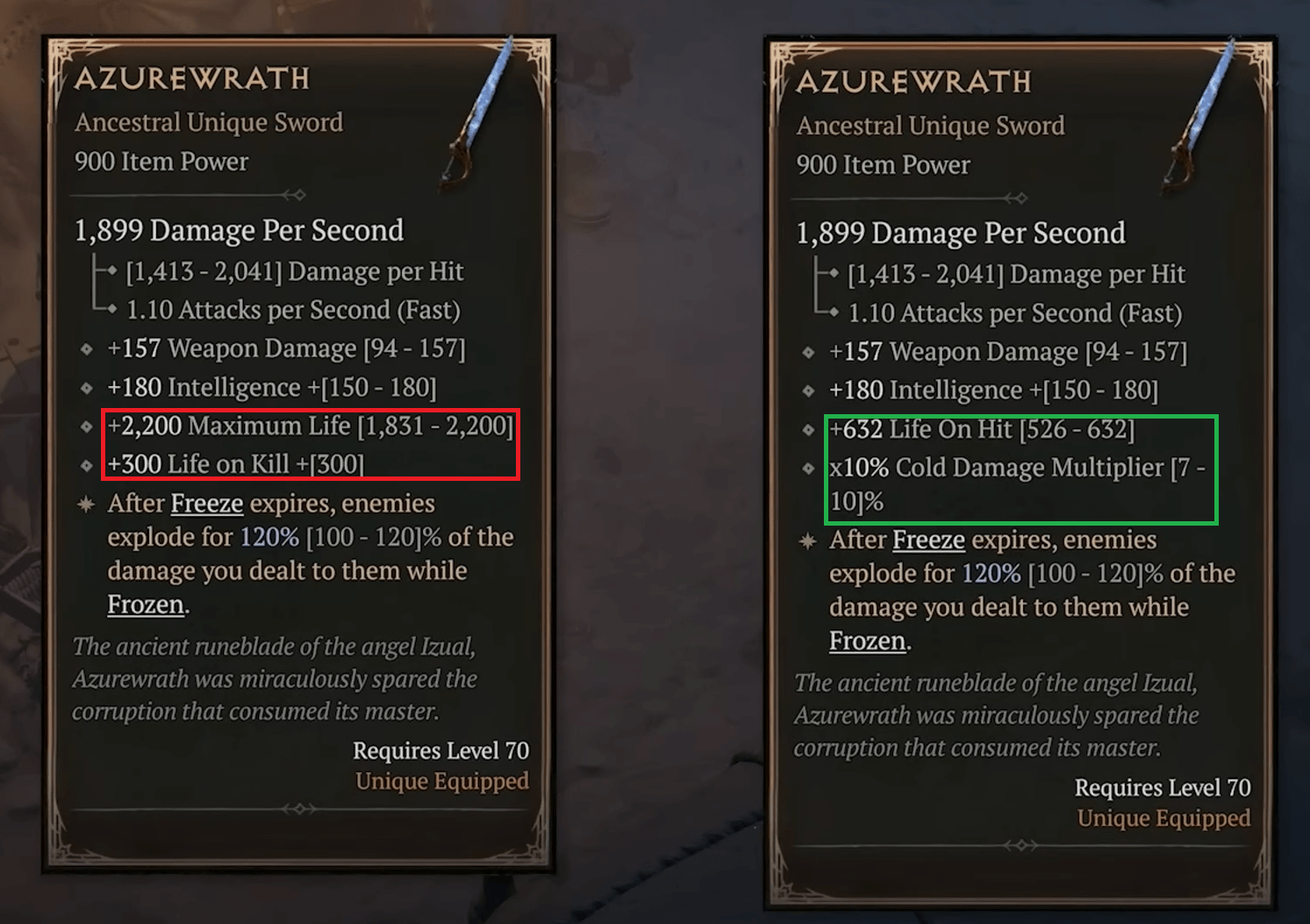
Now, the reason for this change is so that you can chase those affixes that truly unlock the full potential of your D4 build. This is also a way for you to continue playing the Lord of Hatred expansion, especially if you are the type of person who wants to min-max gear.
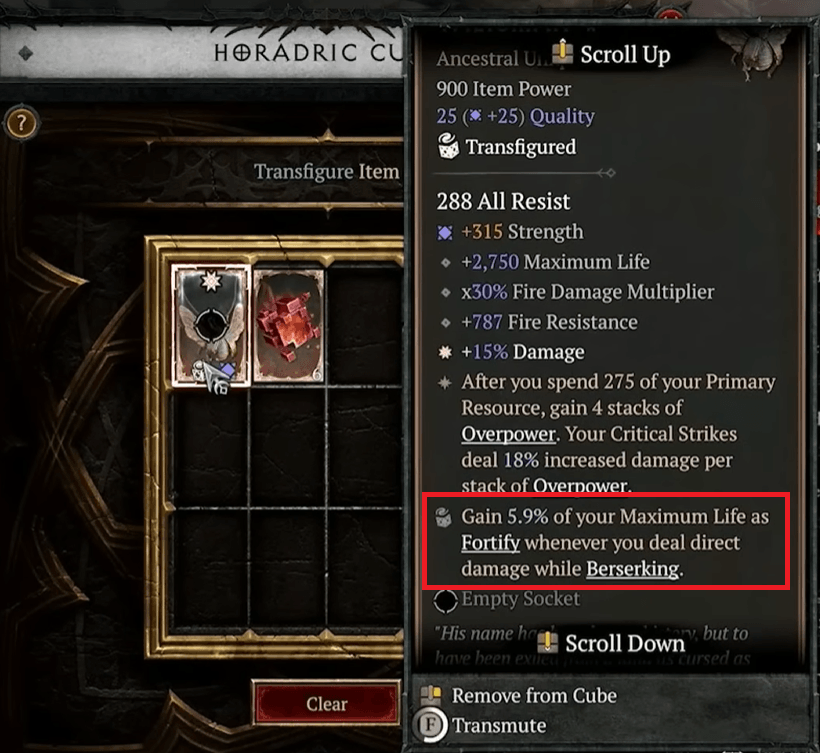
Another interesting change to unique items in Diablo 4: Lord of Hatred, particularly to amulets, is that you can now add a Legendary Aspect to them. The same can be said for Mythic Items as well (like the Melted Heart of Selig). You can do this by using the “Transfigure Item” option in the Horadric Cube, along with a Kullean Tuning Prism.
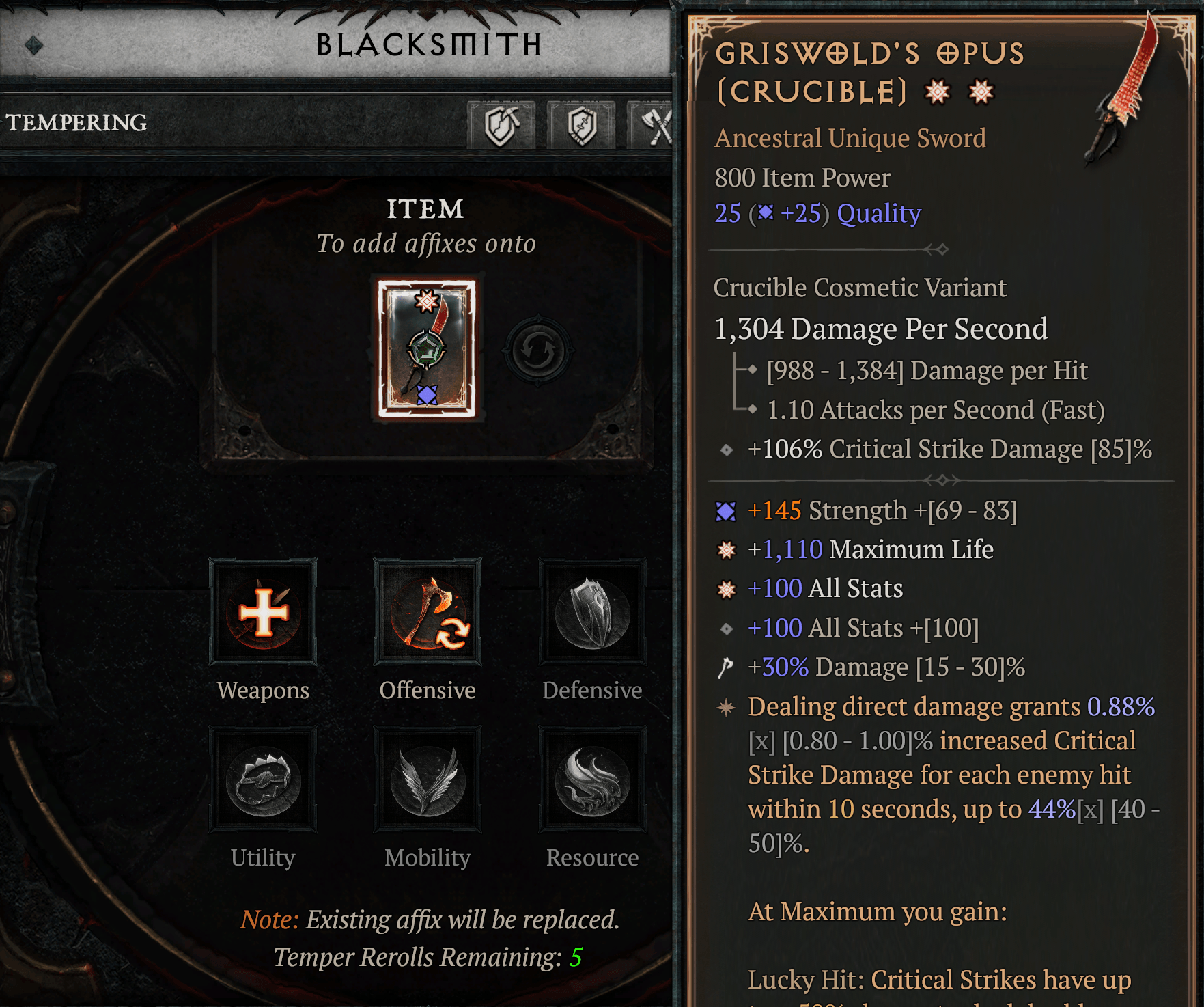
Wait, the craziness does not stop there! You can also now temper unique and mythic items in Diablo 4: Lord of Hatred! Want to boost the damage of Griswold’s Opus even further? You can now do so by heading to the Blacksmith!
Gems
There are two notable changes to gems in Patch 3.0.1. The first is that the update added three new gem tiers to the game. Here is a rundown of all the gem tiers in Diablo 4: Lord of Hatred:
- Crude
- Chipped
- Standard
- Flawless
- Grand
- Horadric
- Flawless Horadric
The Horadric Gems can be created using the Horadric Cube’s “Amalgamation” recipe, which requires multiple grand gems and some “Cube Spoils.” The latter can be acquired as a potential reward from completing your War Plans playlist.
On the other hand, the Flawless Horadric Gem needs a few Horadric Gems of the same type, as well as some Undercity Tributes. Needless to say, the Flawless Gems require a bit more farming to obtain (unless you head to our D4 Store).
Aside from that, gems now provide damage multipliers when socketed into weapons. They are:
- Amethyst: Shadow Damage
- Emerald: Poison Damage
- Ruby: Fire and Holy Damage
- Sapphire: Cold Damage
- Skull: Physical Damage
- Topaz: Lightning Damage
- Diamond: All Damage Multiplier
While Diamonds are a good “all-arounder,” you are still better off socketing gems that actually go in line with the primary damage type of your build. For instance, if you are playing the Crackling Energy Sorcerer (which primarily deals lightning damage), putting a Royal Topaz is better because it grants a 22% lightning damage multiplier (as opposed to a Royal Diamond, which only gives an 18% “all damage” multiplier).
Lair Bosses
Lair bosses now require a single key to open their reward caches after defeat. This is quite useful, particularly when opening the chests from Grigoire, Varshan, and Urivar, which used to require 12 lair boss keys to open.
In addition, there are now two types of Lair Boss Keys. The Regular Lair Boss Key opens the reward chests from the following:
- Beast in Ice
- Harbinger of Hatred
- Varshan
- Grigoire
- Bartuc
- Astaroth
- Urivar
- Lord Zir
The Greater Lair Boss Key, on the other hand, is used to open the reward caches from:
- Duriel
- Andariel
- The Butcher
- Mephisto
This change was needed to help streamline the Lair Boss Keys in Diablo 4: Lord of Hatred.
Miscellaneous Changes
- Stackable items can now stack up to 1,000 pieces each (up from 100).
- Under-utilized runes have been removed, leaving only the better ones for you to choose from.
- Incense and Elixirs have been completely removed from the game. This is because they were items that only provided a temporary boost and required certain crafting materials that people might not have enough of.
- Undercity Tributes can now be upgraded into their higher-rarity variants by sacrificing the lower-end ones.
- You can now temper critical strike chance on weapons (by selecting the “Weapons” tab while tempering).
- Masterworking remains unchanged (since it was just recently revamped in Season 11).
FAQ
What Changed in Diablo 4’s Itemization?
The changes are meant to streamline the process of itemization, making it easier for beginners and veterans alike. They are also meant to unlock the full power of your character by letting you target the specific affixes your build needs.
Is the Horadric Cube Important for Itemization?
Absolutely! The Horadric Cube can be used for a number of things, such as upgrading rares into uniques, adding Legendary Aspects to unique items, transmuting three of the same uniques into another unique item with different affixes, among others.
What is the Best Way to Farm Gear in Lord of Hatred?
String together a good set of activities via War Plans. Completing the playlist not only rewards you with good loot, but it also gives some “Cube Spoils,” which then enable you to use the more advanced Horadric Cube recipes.