


Path of Exile 2: How to Farm Gold in Quickly and Easily
03.09.2025 - 16:19:14
Game Guides , Path of Exile 2


Gold is still one of the easiest resources to run out of in Path of Exile 2. You need it for vendor upgrades, passive respecs, Currency Exchange fees, and other small costs that add up fast while leveling or fixing a build.
The basics of how to farm Gold in PoE 2 have not changed. You still get it by killing monsters, opening chests, clearing bosses, and selling items to vendors. What changed in 0.5.0 Return of the Ancients is the endgame route. It added a more structured Atlas, Fortress progression, new league mechanic hubs, and several vendor/item changes that affect how you should farm.
This update keeps the reliable Gold farming advice from the original version and adds the current 0.5.0 methods you should use once your character reaches maps.
What is Gold in PoE 2?
A guide about Path of Exile 2 Gold Farming should begin with an explanation of what the currency in question actually is. Gold is a type of PoE 2 currency that is used for a variety of things in-game, including buying items from vendors, initiating trades via the Currency Exchange, and refunding passive skills (both from your character’s tree and on the Atlas).
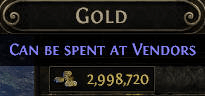
What is Gold Used for?
Gold is quite useful for early-game gearing because it allows you to purchase suitable upgrades from the vendor NPCs located in each major settlement. Just take this bow, for example:
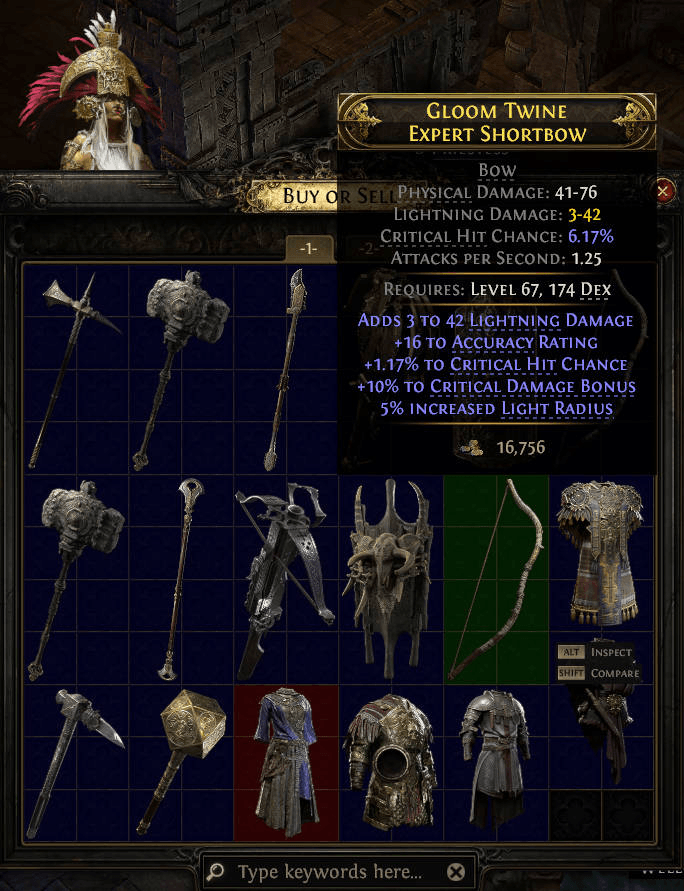
Vendor NPCs may require you to spend upwards of 10,000 Gold if you’re buying gear with a relatively high item level.
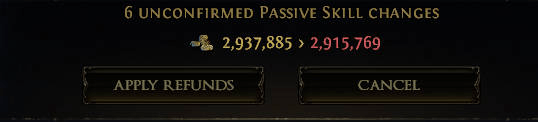
Aside from purchasing early-game upgrades, Gold is used for “respeccing” as well. The term refers to the act of refunding passive skill points in case you want to do something different with your PoE 2 build.
Respeccing early on shouldn’t cost that much. However, as you get into the endgame, you will find that you need to pay a higher fee relative to your current level. What this means is that if you’ve got back six passive skill points at level 15 for 500 Gold, for example, the same number of points may require 10 times that amount at level 95.
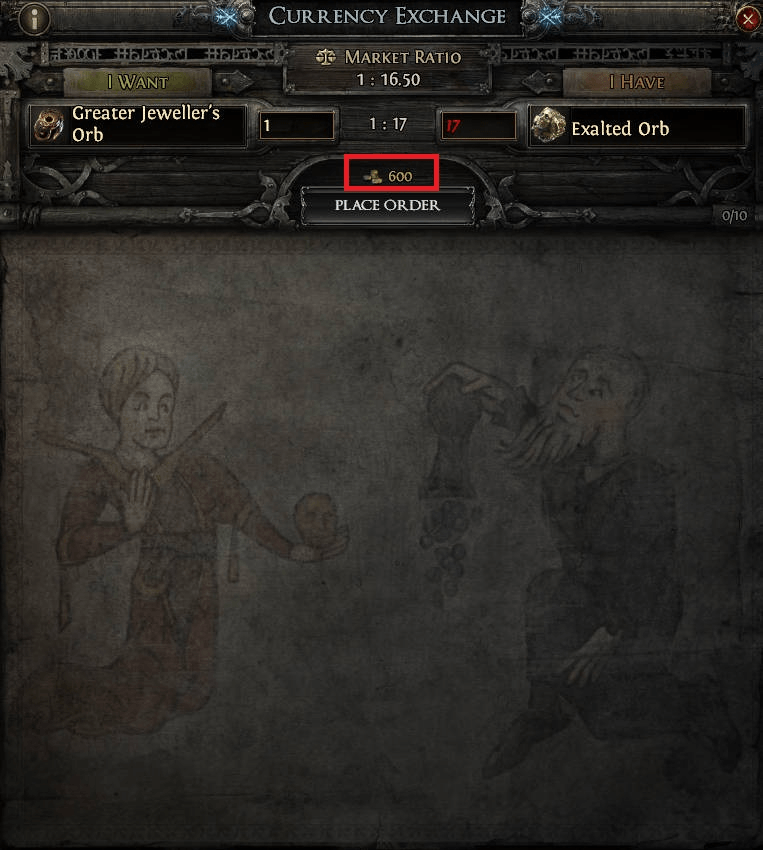
The Currency Exchange is an easy and convenient way to get various currencies in Path of Exile 2 without having to visit the trade website. For instance, you can get a Greater Jeweler’s Orb in exchange for some PoE 2 Exalted Orbs. This service, although quite helpful, does require you to pay a fee. Fortunately, it is not a hefty amount.
Best Ways to Farm Gold in PoE 2 0.5.0
The best way to farm Gold in PoE 2 depends on where your character is. During the campaign, Gold mostly comes from monsters, bosses, chests, and vendor sales. In the Atlas, Gold farming becomes more tied to map density, Waystone modifiers, league mechanics, and Fortress progression.
Do not judge a method only by the amount of Gold on the ground. A good farming route also gives you items to sell, currency drops, Waystones, Atlas progress, and gear upgrades. That is why the best Gold farms are usually the ones your build can clear quickly without dying.
| Method | Best stage | Difficulty | Requirements | Why it works | Notes |
| Selling items to NPCs | Campaign to endgame | Easy | Inventory space and regular town trips | Turns unwanted gear directly into Gold | Keep doing this if your Gold is low |
| Campaign boss farming | Campaign and early Cruel | Easy to medium | Safe single-target damage | Bosses drop Gold, gear, and currency | Best before your Atlas setup is ready |
| Secret rooms and treasure areas | Campaign | Easy | Map awareness | Gives bursts of Gold and extra loot | Do not waste too much time full-searching every zone |
| High-level gear vendoring | Late campaign to Atlas | Easy | Higher item level drops | Better items often sell for more Gold | Rare items are usually worth checking |
| Improved Waystone farming | Atlas | Medium | Identified Waystones and a stable build | Better map rewards mean more drops and vendor loot | Avoid modifiers that your build cannot handle |
| Fortress progression | Endgame | Medium to hard | Atlas progress after your first tower | Fortress maps grant Atlas Passive Tree points | Strong long-term value, not just raw Gold |
| League mechanic hubs | Atlas | Varies | Build suited to the mechanic | Adds monsters, rewards, and valuable drops | Pick mechanics your build clears fast |
| Legacy Expedition Currency vendoring | Standard / old stash cleanup | Easy | Old Expedition currency | Can now be sold to vendors for Gold | Useful if you have old currency sitting around |
| Act 3 Priceless Idols | Campaign | Easy | Act 3 progression | Oswald now pays much more Gold | Good one-time Gold bump while leveling |
For most players, the best setup is simple: sell unwanted loot, run maps you can clear safely, improve Waystones without bricking your build, and progress through Fortress maps when you are ready. Chasing harder content too early usually lowers your Gold per session because deaths and slow clears eat too much time.
Sell Items to NPCs
You may have heard from other PoE 2 players that it is a good idea to disenchant items early on so that you can engage with crafting better gear. However, we advise against this, especially if you’re still starting out.
When you acquire normal, magic, and rare items in the first few acts of the campaign, you must sell them to the vendor NPCs for a profit. The reason why this is a viable strategy as a way of getting gold in Path of Exile 2 is that the gear that you can craft in the beginning is not even good enough to be used late in the game.
Don’t worry, you will come across a bunch of crafting currencies like Transmutations and Regals just by going through the campaign; all without disenchanting magic or rare gear.
Selling rare items above level 79 to vendors also nets good returns. If you prefer a more melee / slam-centric approach and want to leverage high-damage physical gear, a build such as the Boneshatter Titan can be surprisingly effective early on.
This advice still applies in 0.5.0. If you are low on Gold, do not disenchant everything out of habit. Selling normal, magic, and rare items is still one of the most consistent ways to refill your Gold during campaign and mapping.
A good rule is to vendor more aggressively when you are preparing for respecs, buying a vendor weapon, or using the Currency Exchange often. Switch back to disenchanting when you specifically need crafting materials instead of Gold.
Eliminate Campaign Bosses
Bosses in Path of Exile 2 are very generous when it comes to rewards. Aside from possible gear upgrades and crafting currencies, the bosses in the game may drop a copious amount of Gold for your efforts. This is likely due to the fact that they are generally much harder to defeat than any campaign boss in PoE 1.
Having said that, there are some bosses that you can defeat easily; often without breaking a sweat. In Act 1, you can head to the Mausoleum of the Praetor, where Draven, the Eternal Praetor resides.
His moves are easy to evade with a well-timed Dodge Roll. We recommend that you crank the in-game volume up because he says something before he initiates an attack. For instance, when he says “Perish,” he will slash the ground, creating a Necrotic Wave that deals considerable amounts of damage. After you hear him uttering that word, you now know what he’s going to do next.
Another boss that you can farm for Gold in Path of Exile 2 is the King in the Mists. He is found in Freythorn in Act 1, though you have to perform several rituals before he shows himself. You’ll want to kill the King in the Mists anyway because he drops an item that grants a permanent 30 points of Spirit.
Just about any major boss in the campaign can drop a relatively good amount of Gold. You just have to be courageous and diligent enough to defeat them multiple times.
Campaign boss farming is still useful, but it should not become a trap. If your character can already clear maps safely, staying in low-level campaign areas for Gold usually falls behind Atlas farming. Boss farming is best when you are still leveling, testing a build, or need quick Gold before pushing into harder content.
Campaign Gold Farming
Campaign Gold farming should be simple and low-effort. Kill dense packs, clear bosses that are already close to your route, open obvious chests, and sell items you are not using. The goal is to keep your Gold stable while leveling, not to spend hours farming low-level areas.

The original methods still work well here. Selling items to NPCs is the most reliable source because you control it. If your inventory fills up with gear that does not help your build, return to town and sell it. You lose some time on the trip, but you gain Gold for vendor upgrades, passive refunds, and exchange fees.
Bosses are also worth farming if your build kills them quickly. Draven, the King in the Mists, and other campaign bosses can drop Gold and useful items. The key word is quickly. If the boss takes too long or has a high death chance, move on and progress instead.
Secret rooms, side areas, and treasure-heavy layouts can also help, but do not overdo it. Full-clearing every wall and corner slows down leveling. Check the areas that are already near your path, then keep moving.
Act 3 received a direct Gold-related boost through Oswald’s Priceless Idol rewards. Oswald now offers 3,000, 4,000, and 6,000 Gold for Priceless Idols, which makes these turn-ins much more worth grabbing during campaign progression. This is not an endless farm, but it is a useful Gold bump while moving through the act.
Campaign farming is best for early characters, fresh league starts, and players who need enough Gold to fix a build mistake. Once your character has stable resistances, decent damage, and enough defenses for maps, Atlas farming becomes the better long-term route.
Always Improve Your Waystones
If you’re wondering how you can “juice up” your maps, the process involves the use of crafting currencies to improve your Waystones, as well as putting Precursor Tablets in Lost Towers.
The gist of this strategy is you want your maps to have item quantity and item rarity boosted to a significant degree. This results in high-level items dropping like candies while mapping.
You also have to think about your survivability. If you can run a T14 map without dying, that is even better compared to accomplishing a fully-juiced T15 map where you have a high probability of getting killed.
Atlas and Fortress Gold Farming
The biggest 0.5.0 change for Gold farming is not a direct Gold drop buff. It is the new endgame structure. The Atlas now has fixed points of interest, league mechanic questlines, and Fortress progression that gives Atlas Passive Tree points. That means your best farming route should push account progress and Gold at the same time.
Once you are in maps, start with Waystones your build can clear safely. A clean map where you kill most monsters, loot quickly, and leave with vendor items is better than a harder map that kills you or forces you to skip rares. Gold farming rewards steady clears more than risky map juicing.
Waystones now need to be identified before they can be activated in the Map Device. Check the modifiers before running them. If a modifier heavily counters your build, save the Waystone for later or avoid it. Do not turn a Gold farm into a slow crawl just because the map tier looks good.
Map modifiers now give rewards such as Monster Effectiveness, Pack Size, Item Rarity, Monster Rarity, or Waystone Drop Chance, depending on the modifier. Pack Size is especially useful for Gold farming because more monsters means more Gold drops, more item drops, and more chances at rare monsters. Rare monster packs can also become more valuable through modifier updates, so dense maps with manageable difficulty are worth prioritizing.
Fortress progression is now a major part of endgame farming. After completing your first tower, a Fortress rises from the earth. Maps inside the Fortress grant Atlas Passive Tree points, replacing the older method of gaining Atlas points. This matters because Atlas points improve your future farming setup. Even if a Fortress map is not the single best raw Gold map in the moment, completing it can make every later farming session better.
Do not skip Fortress maps just to repeat an old loop. The 0.5.0 Atlas is built around progression. More Atlas points mean more control over the content you run, better access to mechanics you like, and stronger long-term farming routes.
Use this priority order once you reach maps:
- Run maps your build clears without deaths.
- Identify Waystones and avoid bad modifiers.
- Favor density, pack size, and clearable reward mods.
- Sell unwanted rare items instead of leaving value on the ground.
- Complete Fortress maps for Atlas Passive Tree points.
- Specialize into league mechanics your build handles well.
This keeps Gold farming tied to real progress. You are not just farming Gold for its own sake. You are building a better Atlas, improving your drop flow, and setting up stronger future farms.
If your build is undergeared and you want to shorten the grind, RPGStash has PoE 2 currency options that can help cover upgrades, respec costs, or trade needs without forcing you to repeat low-value farms for hours.
League Mechanics That Help Gold Farming
League mechanics help Gold farming when they add monsters, rewards, and vendor value without slowing your clear too much. The best mechanic is not always the one with the highest ceiling. It is the one your build can finish fast and safely.
Runes of Aldur is the headline mechanic in 0.5.0. It adds Remnant encounters and Runic Recipes, giving you more combat and more rewards inside normal play. For Gold farming, the value comes from added monsters and extra loot. Be careful with modifiers, though. If you stack effects that your build cannot handle, the encounter can slow you down or kill you.
Expedition is worth mentioning because old Expedition currency now has direct Gold value. Legacy Expedition Currency can be sold to vendors for Gold. If you have old currency sitting in your stash, check it instead of ignoring it. Expedition content itself can still be rewarding, but only run it heavily if your build handles the encounter flow well.
Ritual is good for builds that can fight inside tight spaces and survive repeated waves. It adds monsters and reward choices, but it can be rough for fragile builds. If Ritual fights take too long or force deaths, skip them until your gear improves.
Breach rewards fast AoE clear. More monsters can mean more drops and more items to vendor, but Breach punishes slow builds. If you cannot keep up with the timer or enemies overwhelm you, it is not the right Gold farm yet.
Delirium can be strong for fast builds because it adds pressure, monsters, and extra rewards. It is also easy to overreach. If you spend the whole map backtracking or fighting enemies that take too long to kill, Delirium stops being efficient.
Abyss can work well for characters with good movement and steady damage. It adds extra packs and can lead into more content. The downside is that it can pull you across awkward routes, so it is better in maps where you can follow the Abyss without wasting too much time.
The simple rule is this: run league mechanics that add density without breaking your rhythm. Gold farming is not only about what drops. It is also about how many clean maps you finish per session.
0.5.0 Gold and Vendor Changes
Return of the Ancients added several confirmed Gold and vendor-related changes. These are worth knowing because they affect both farming and spending.
Legacy Expedition Currency can now be sold to vendors for Gold. This is useful for players with older Expedition currency in storage. Instead of letting those items sit unused, vendor them and turn them into a resource you can spend right away.
Oswald now pays much more for Priceless Idols in Act 3. The updated values are 3,000, 4,000, and 6,000 Gold. These rewards were much lower before, so Act 3 idol turn-ins are now a better campaign Gold source.
Rabbit Idol also received a Gold-related update. It now has a limit of 1, and its Bonded modifier grants 10% increased Quantity of Gold Dropped by Slain Enemies when socketed in Body Armours. This was previously 5%. Since Rabbit Idol has a limit, do not build your plan around stacking several of them. Treat it as a small bonus if it fits your setup.
The Gold price of weapons for asynchronous trade increased by around 50%. If you often buy weapons through asynchronous trade, keep a larger Gold buffer than before. This matters most during leveling and early mapping, where weapon upgrades can be the biggest damage spike for attack builds.
These changes do not replace normal Gold farming. They adjust your habits. Sell old Expedition currency, grab Act 3 idol payouts, use Rabbit Idol if it fits naturally, and avoid spending your last Gold before checking weapon trade costs.
Common Gold Farming Mistakes
A lot of Gold problems come from bad habits, not bad luck. If you are always broke in PoE 2, check these mistakes first.
Farming outdated routes for too long
Old campaign farming routes can still work, but they should not replace Atlas progression once your build is ready. If a route gives low item level drops, weak vendor value, and no Atlas progress, move on.
Running content your build cannot clear safely
Harder content is only better if you finish it cleanly. A map with better rewards is not worth it if you die, skip rares, or take twice as long to clear. Run the highest content your build can handle smoothly.
Ignoring vendor value
Many players leave Gold behind by ignoring rare items or disenchanting everything. If you need Gold, sell more items. You can always go back to disenchanting later when crafting materials become the bigger need.
Spending too much before Atlas progression
Do not drain your Gold on minor vendor upgrades before your mapping setup is stable. Save enough for passive refunds, Currency Exchange fees, and stronger gear that actually changes your clear speed or survivability.
Over-juicing Waystones too early
Improved Waystones can give better rewards, but bad modifiers can ruin a map. If your build struggles with a modifier, skip that Waystone or save it. Steady clears beat risky maps.
Forcing every league mechanic
Not every mechanic fits every build. Breach wants speed. Ritual wants survivability in tight spaces. Delirium wants forward momentum. Pick mechanics that match your character instead of running everything because it appeared.
Trusting exact Gold-per-hour claims
Gold income changes based on build speed, map tier, modifiers, deaths, league mechanics, and what you sell. Avoid exact Gold-per-hour claims unless they were tested after the current patch with a clear setup.
FAQ
What is the best way to farm Gold in PoE 2 0.5.0?
For most players, the best method is safe Atlas farming with identified Waystones, good pack density, regular vendor sales, and Fortress progression. Campaign boss farming is fine early, but Atlas farming gives better long-term value once your build is ready.
Did Return of the Ancients change Gold farming?
Yes. The basic Gold sources are still the same, but 0.5.0 changed the endgame route. Fortress maps now grant Atlas Passive Tree points, the Atlas has fixed points of interest, and league mechanic hubs give more structure to farming. There were also vendor and item changes that affect Gold income and spending.
Is campaign or Atlas better for Gold farming?
Campaign farming is better for leveling characters or builds that are not ready for maps. Atlas farming is better once your damage, defenses, and resistances are stable. If you can clear maps without dying often, move into Atlas and Fortress progression.
What should I spend Gold on first?
Spend Gold on upgrades that solve real problems. That usually means a stronger weapon, resistance gear, passive refunds, or Currency Exchange fees. Avoid buying tiny vendor upgrades that will be replaced almost immediately.
Should I sell or disenchant items?
Sell items when you need Gold. Disenchant when you need crafting materials. During the campaign, selling extra gear is often the better choice because Gold helps with vendors and respecs. In endgame, swap between both depending on what your character needs.
Are Priceless Idols worth selling in 0.5.0?
Yes. Oswald now offers 3,000, 4,000, and 6,000 Gold for Priceless Idols in Act 3. That makes them worth turning in while progressing through the campaign.
Is Rabbit Idol good for Gold farming?
Rabbit Idol can help if it fits your gear setup. Its Bonded modifier now gives 10% increased Quantity of Gold Dropped by Slain Enemies when socketed in Body Armours. It also has a limit of 1, so treat it as a bonus rather than the core of your farm.
Should I farm Gold or buy upgrades first?
Farm enough Gold to keep your build flexible, then spend only when an upgrade solves a clear issue. If you are stuck because of weak gear, poor damage, or bad resistances, getting the upgrade first may save more time than farming slowly with a weak setup.
Earn More Gold In PoE 2
Do not chase exact Gold-per-hour claims unless they were tested after 0.5.0. Gold farming depends heavily on build speed, map layout, modifiers, Atlas progression, and how efficiently you vendor items. A safe route you can repeat smoothly will almost always beat a risky route that looks better on paper.

Gold farming works best when it supports a clear build goal. If you are short on key upgrades, compare PoE 2 Currency options after prioritizing your resistances, mapping speed, and endgame progression needs.