


PoE 2: Druid Ascendancy Classes Explained
10.12.2025 - 07:33:18
Game Guides , Path of Exile 2


The Druid Class in PoE 2 is a first of its kind in the franchise. This class not only has the ability to cast devastating nature magic, but is also known for shapeshifting into various animal forms depending on the situation.
While the Druid is already interesting, its ascendancy classes are really what separate it from the rest of the PoE 2 classes. So, if you are interested in what the Druid Ascendancy Classes can do in Path of Exile 2’s latest expansion, then read ahead.
The Druid uses the Animal Talisman as a default weapon, which enables him to shapeshift into three animal forms, namely the Bear, Werewolf, and Wyvern. If you want to get your hands on the best items for the said class, visit our Store to get PoE 2 Items. We will have everything in stock in the first few days of the new league, so be sure to check it out!
Having said that, the Druid and its ascendancy classes, in particular, have not received any changes in Path of Exile 2: Return of the Ancients [0.5.0]. However, fresh skill interactions and builds have arisen in Patch 0.5.0, largely due to the new Runic Ward defensive layer and new Kalguuran skills.
How the Druid Class Works in Path of Exile 2
In case you’re not aware, the Druid is the first hybrid class in Path of Exile 2. This STR/INT class can maul and shred enemies to bits in melee range, while also having the ability to cast powerful magic spells that obliterate the Druid’s foes with ease.
Core Identity
The main selling point of the Druid is its ability to transform into different animal forms, such as the Bear, Werewolf, and Wyvern. The Bear is more of a tank, leveraging Rage (the resource) to cause powerful slams that eliminate monsters without a hitch.
The Werewolf is the Druid’s more balanced form. While it can fight on its own, he can utilize certain abilities that enable him to summon a Wolf companion when killing marked enemies.
However, the true power of the Werewolf lies in its ability to harness the power of the moon. While in this form, it can deal powerful cold damage with each pounce or attack.
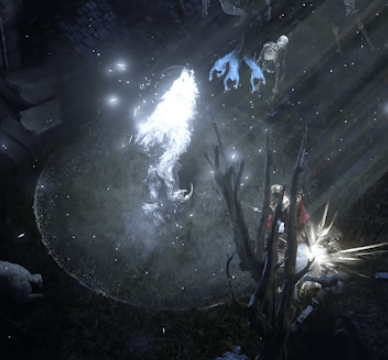
And lastly, you have the Wyvern. The Druid’s dragon is true to its namesake, as it is able to fly a little bit, while also spewing its fiery breath to melt all of its enemies! The Wyvern deals tremendous damage if it has Power Charges, which is quite easy to generate with its attacks.
For instance, Devour will prompt the Druid to transform into a Wyvern, swallowing slain enemies or those that are near-death, granting a Power Charge in the process. The Power Charge that Devour generates can then be used by a follow-up skill, like Flame Breath, to infuse it with lightning damage that can Shock enemies.

Druid Strengths
According to GGG, the Druid is best utilized in a hybrid style of play, where you mesh both its ferocious animal forms, as well as its proficiency in casting nature magic (in human form).
Speaking of which, some nature spells can synergize with each other. Entangle allows the Druid to conjure vines that can whip nearby enemies. Follow that up with Thunderstorm to “drench” those vines, causing them to get the “Overgrown” status and increase their duration by 50%.
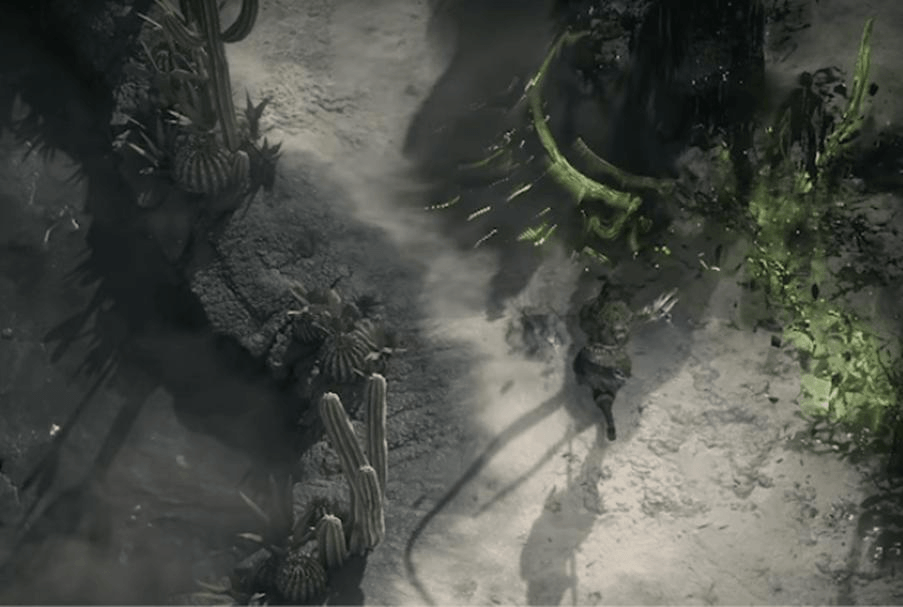
Aside from that, you can cast Volcano and then immediately shapeshift into Bear Form. As the Volcano unleashes numerous fire-based projectiles onto nearby enemies, using slam skills near the volcano would cause it to spew out even more projectiles.
It is highly recommended that you continuously change from animal form to human form when playing the Druid. You must also have knowledge about the weapon set system, so that you can switch between different weapons to maximize the damage of your abilities. You can read our guide on weapon set skills for more information.
Ascendancy Role in Build Theorycrafting
Grinding Gear Games has really done an admirable job creating the ascendancy classes for the Druid. This is because each of its ascendancy classes truly brings out what the Druid is capable of.
In the next sections, I will go over every bit of information on each of the Druid ascendancy classes in Path of Exile 2.
All PoE 2 Druid Ascendancy Classes (Overview)
Shaman

Do you want to play the Druid in its animal forms for most of the time? If so, the Shaman is the right Druid ascendancy class for you!
The Shaman truly unlocks the Druid’s ferocious side by providing various bonuses to Rage and survivability. Furious Wellspring is an ascendancy node that allows the Druid to generate Rage that can be further enhanced by investing in mana regeneration modifiers.
Although the skills do cost five Rage for each use, that is a fair compromise, given that you don’t lose Rage anymore when you are not attacking (with Furious Wellspring allocated, of course).
Wisdom of the Maji also deserves some recognition. This ascendancy node can unlock the true power of runes, making them provide you with more bonuses as a result. This is indicated by the word “Bonded” when you hover your mouse over the runes.
For example, the Greater Rune of Vision grants a 1.25% boost to critical hit chance when socketed into a martial weapon (for which the Animal Talisman is one). I don’t know the full extent of these bonuses yet. However, the idea of gaining effects that other classes do not have access to makes the Shaman’s Wisdom of the Maji interesting to take.

If you want to lean heavily towards the caster archetype of the Druid, then Druidic Champion is a must-have. This allows the Druid to gain 1% more spell damage for every two points of Rage. When taken with Furious Wellspring, you already have 37 points of Rage to work with, which translates to 18% more spell damage!
Although it may not seem like it, the Druid has the potential to become an excellent summoner as well. His Sacred Flow ascendancy node grants 40 Spirit for each empty Charm slot. Since you only really need the Thawing Charm to survive (makes you immune to being frozen), you essentially have 80 Spirit at your disposal with Sacred Flow!
Here is a rundown of all the ascendancy nodes available to the Shaman in Path of Exile 2:
- Avatar of Evolution
- 5% of Physical Damage Taken as Fire Damage
- 5% of Physical Damage Taken as Cold Damage
- 5% of Physical Damage Taken as Lightning Damage
- Adaptations Have a Duration of 5 Seconds
- Double Adaptation Effect
- Note: Adaptations normally do not have a duration. Taking Avatar of Evolution imposes a 5-second duration on all the Adaptations you gain. This is fine, considering that this node also converts elemental damage to be taken as physical damage to improve survivability.
- Bringer of the Apocalypse
- Grants Skill: Apocalypse
- Note: When this node is taken, you gain Glory when hitting enemies with elemental skills. Once you have 100 Glory, Apocalypse can be activated. When it’s active, it triggers a Hailstorm, Meteor, or Crash Lightning every 0.75 seconds for the Apocalypse’s entire duration (of 12 seconds). Since a good number of Druid skills deal elemental damage, then you can take this ascendancy node to improve your damage output even further.
- Druidic Champion
- Every 2 Rage also Grants 1% More Spell Damage
- Note: Often paired with “Crown of Eyes” to get more attack damage by increasing spell damage.
- Furious Wellspring
- No Inherent Loss of Rage
- Regenerate 6% of Your Maximum Rage per Second
- Increases and Reductions to Mana Regeneration Rate also Apply to Rage Regeneration Rate
- Skills Which are not Default Attacks Cost +5 to Rage to Use
- +7 to Maximum Rage
- Reactive Growth
- Take 4% Less Elemental Damage per Adaptation, matching that Adaptation’s Type
- Sacred Flow
- Gain 40 Spirit for each available empty Charm Slot
- Note: Unlocks the ability for Shamans to become minion commanders. Don’t equip any Charm to get this node’s full effect.
- Wisdom of the Maji
- Gain the Benefits of Additional “Bonded” Modifiers on Runes and Idols
- Note: This node is powerful, especially when GGG adds more runes in later expansions.
Oracle

If the previous Druid ascendancy class in PoE 2 unleashes the full power of its animal and human forms, this next one has mastered the power of foresight, giving advantages that others do not have access to.
The Oracle has some rather interesting yet somewhat complicated mechanics. Fateful Vision grants the “Align Fate” skill, which lets the Druid see their future self, casting various spells. If the Druid casts the same spells as its vision, that spell will deal increased damage.
Some enemies in Path of Exile 2 are immune to certain ailments, such as Freeze, Shock, or Ignite. Allocating “Converging Paths” solves this by allowing you to use Moment of Vulnerability. This skill creates a vision of the enemy that you can attack with all of your might. This particular vision is not immune to anything, so if you want to inflict Shock on it, the main enemy will also be shocked once the skill’s duration expires.
While both of those ascendancy nodes are unique and awesome in their own way, nothing beats The Unseen Path. This ascendancy node essentially unlocks new nodes that you can allocate on the Passive Tree. The Unseen Path is a theorycrafter’s dream because there are so many new nodes that you can experiment with!

Passive Nodes without The Unseen Path
Remember the “Sacred Flow” ascendancy node from the Shaman? Well, the Oracle has a better version of it called Self Sacrificing.
Self Sacrificing is a notable passive skill that increases the reservation efficiency of minion skills by a whopping 40%! This allows you to effectively summon at least two additional minions (or one for a super-powerful spectre) at your disposal!
Corruption Endures is another notable passive skill that is available to you when you allocate The Unseen Path. This gives you a small chance to survive a devastating hit, like boss slams and whatnot. Corruption Endures is something that you could take whenever you play PoE 2 SSF.
Here is a rundown of all the Oracle ascendancy nodes in PoE 2:
- Converging Paths
- Grants Skill: Moment of Vulnerability
- Note: Moment of Vulnerability creates a “vision” of the enemy that you can attack. This vision is not immune to anything, so you can inflict various ailments on it, which it will then transmit to the affected enemy. Ideal to use on pinnacle bosses.
- Fateful Vision
- Grants Skill: Align Fate
- Note: Align Fate will occasionally create future versions of yourself, casting a random spell every time. When you cast the same spell as your vision, that spell will gain a considerable damage boost.
- Forced Outcome
- Inevitable Critical Hits
- Note: This node would continually reroll your critical hit chance until you are able to land a critical hit. The downside of this, however, is that the attack or spell would continuously lose some critical damage bonus (30% less) for each time the critical hit chance was re-rolled.
- Harmony Within
- Hit damage is taken from Mana before Life if Your Current Mana is Higher Than Your Current Life
- 15% Less Maximum Life
- 15% Less Maximum Mana
- Note: Great for Druid Builds that allocate Chaos Inoculation.
- The Lesser Harm
- Enemy Critical Hit Chance against you is Unlucky
- Damage of enemies Hitting you is Unlucky
- Note: Significantly boosts your survivability by lowering the enemy’s damage and critical hit chance against you. Suitable for Druids playing in PoE 2 SSF.
- Traveler’s Wisdom
- Non-Keystone Passive Skills in the Medium Radius of allocated Keystone Passive Skills can be allocated without being connected to your tree.
- Note: This is quite similar to a Controlled Metamorphosis (Medium Ring), but without the reduction of elemental and chaos resistance. Traveler’s Wisdom can be combined with The Unseen Path for some interesting passive skill combinations.
Updates for PoE 2 Return of the Ancients [0.5.0]
According to the patch notes for Path of Exile 2: Return of the Ancients, the Shaman and Oracle did not receive any changes whatsoever. Their ascendancy nodes still provide the same benefits and functionalities as they did prior to the launch of the Runes of Aldur League.
Having said that, there is one thing to note here, in that Patch 0.5.0 has introduced a new defensive layer called Runic Ward. This acts as a “second life” that kicks in the moment you suffer from a devastating hit that would have caused your life to reach zero. When it activates, your HP will drop to 1 and it will take the remaining damage, so long as you have enough Runic Ward left to take damage from subsequent hits.
In most cases, however, Runic Ward is only there for some PoE 2 Druid Builds to utilize the new Kalguuran skills. It’s still nice to have some on your gear, though, because of that added layer of protection, which could come in handy when taking on the new pinnacle bosses (like the Arbiter of Divinity and The Aberration).
The PoE 2 Kalguuran skills in question that Druids use in Return of the Ancients are:
- Refutation: This is a new Kalguuran skill that uses all of your Runic Ward to provide you with a temporary buff. This buff allows you to block all incoming attacks while also inflicting the “Parried” debuff on enemies, causing them to take 50% more attack damage.
- Leylines: Lets you see areas called “Leylines” that grant more spell damage when you’re standing on them. Leylines drain your Runic Ward every second, so having lots of Runic Ward from your gear is necessary to get the most out of the buff.
- Fragments of the Past: By spending Runic Ward, you create a Verisium Volcano that triggers ice fragments every 0.5 seconds, dealing damage to nearby enemies. The Verisium Volcano from Fragments of the Past lasts for 8 seconds.
- Bitter Dead: It seems that most of the Kalguuran skills deal cold damage, and Bitter Dead is another example of why that is. When cast, you spend some of your Runic Ward to transform nearby corpses into bitter cores that target and explode enemies, dealing cold damage up front and another cold damage applied over time.
- Grim Pillars: This Kalguuran skill is popular among Oracle Builds in PoE 2, specifically when it’s used in conjunction with spell totems. When utilizing this interaction, Grim Pillars do not spend Runic Ward, mainly because spell totems don’t have any resources to begin with. The result is a build that can establish several totems at once, filling up the screen with multiple spears of ice that deal significant damage to enemies within the vicinity of the totems.
Comparing the PoE 2 Druid Ascendancies (Which One Should You Play?)
Best for Beginners
By the looks of it, the Shaman seems to be a straightforward choice, so I would recommend it for Path of Exile 2 beginners. You just allocate the right nodes depending on what you want to achieve with the Druid class.
Take Furious Wellspring so that you will never run out of Rage. You could introduce more mana regeneration modifiers in your gear, though I wouldn’t allocate nodes on the passive tree specifically to improve that.
Wisdom of the Maji unlocks “Bonded” modifiers on various runes that you can find in the game. Maybe you can use the normal runes while leveling with this ascendancy node allocated to gain additional effects, which makes your campaign completion a whole lot easier.
If you are into spellcasting, Druidic Champion is a no-brainer. Gaining more spell damage per two points of Rage is quite handy, especially since nodes that increase your maximum Rage are quite accessible from the Druid’s starting point on the tree.
Bringer of the Apocalypse is something that you could experiment for yourself. This prompts the Druid to unleash a barrage of elemental projectiles from the sky, making it a suitable addition to a budding Shaman master.
Best for Bossing
To be clear, both Druid ascendancy classes are capable of dispatching the many bosses in Path of Exile 2. However, the Oracle is more suited for slaying bosses for a couple of reasons.
First, allocating The Unseen Path will unlock nodes on the passive tree that no one has ever seen before. Combined with Traveler’s Wisdom, you can potentially take more than a few of these special nodes without wasting too many points!
Second, Converging Paths makes pinnacle bosses, like the new Arbiter of Divinity, less formidable. By creating a vision of these bosses, you can attack them to inflict various ailments. Taking Forced Outcome will turn the tide of battle in your favor as well.
PoE 2 Druid Ascendancy Classes Compared
Here is a handy table that lets you compare the strengths and weaknesses of the Shaman and Oracle in Path of Exile 2 at a glance:
| Ascendancy | Main Playstyle | Strengths | Weaknesses | Beginner-friendliness | Best Build Direction |
| Shaman | Melee builds that either specialize in Bear or Wolf Forms | +Strong survivability through “adaptations” from “Avatar of Evolution.” +Has an easy time generating and sustaining Rage. +Unlocks “hidden” bonuses from runes and idols thanks to “Wisdom of the Maji.” +Can gain a good amount of Spirit thanks to “Sacred Flow.” +Can delve into elemental-based builds due to Exposure application with “Turning of the Seasons,” followed by a devastating spell in Apocalypse (from “Bringer of the Apocalypse”). | -Has limited build flexibility outside of his animal forms. -Lack of mitigation against chaos damage. -Encourages an “aggressive” playstyle to maintain Adaptation stacks and Rage, which some may find unappealing. | The Shaman is more beginner-friendly due to its straightforward ascendancy nodes, with little to no complexities. | For beginners, you can go with a Shaman Build that focuses on Maul + Walking Calamity or Pounce + Lunar Assault. |
| Oracle | Totems, spells, and melee combat—the Oracle can do that and then some. This is due to his “The Unseen Path” ascendancy node, which unlocks plenty of hidden nodes on the passive tree that only the Oracle has access to. | +Incredible build diversity due to “The Unseen Path.” +Easy to scale crit thanks to “Forced Outcome” ascendancy node. +Good for totem builds due to “Unnamed Heartwood,” which not only increases totem count but also makes totems last longer after their HP is reduced to zero. +Has passive tree flexibility with “Entwined Realities.” Taking this ascendancy node would allow you to take non-keystone passive skills around the keystones that you’ve allocated on the tree, without actually being connected to them. | -Not enough damage mitigation on the tree, which may force you to put Runic Ward for an added layer of defense. -Might be too complex for some people, especially when taking “The Unseen Path.” -Has a couple of underutilized ascendancy nodes (Converging Paths and Fateful Vision) that could be better. These may be changed in a later update due to low usage. | Apart from totems or builds centered around the Bear or Wolf, the Oracle is a bit more complex than the Shaman because of his ascendancy nodes. | Try the different animal forms and totems when playing the Oracle ascendancy class in PoE 2. |
Some additional notes:
- If you like playing a class that can shapeshift seamlessly from one animal form to another, then the Shaman is a great choice for this particular playstyle.
- The Shaman can also be built like a spellcaster, taking nodes such as Druidic Champion for more spell damage and Turning of the Seasons for elemental Exposure.
- For more experienced players, the Shaman could become a minion-focused build. Take “Sacred” flow to gain heaps of Spirit by not putting any Charm on your character.
- In most cases, “Forced Outcome” is a lock because of the improved chance to land a critical strike. Other than that, the Oracle is open to experimentation, which some may find a bit daunting, given the myriad of options available.
- Try builds centered around the various animal forms and totems when playing the Oracle. Once you are comfortable with how this ascendancy class plays, you can tinker with “The Unseen Path” and see what nodes you could take to improve your existing build.
Patch 0.5.0 Build Recommendations for Druid Ascendancies
The most prevalent build archetype for the Druid in Path of Exile 2: Return of the Ancients is one that’s centered around spell totems. Hence, the creation of the Grim Pillars Oracle.
Grim Pillars is a new Kalguuran skill introduced in Patch 0.5.0 that creates pillars of ice that explode when used in tandem with another skill. For this reason, most Oracles cast Entangle, which is supported by Biting Cold, to break those icy spears, dealing massive cold damage to nearby enemies in the process.
If you don’t like to use Grim Pillars for some reason, you could opt for another spell totem build; only this time, it uses Spark instead. While the spell totems are casting Spark automatically, you will use Thunderstorm to “drench” enemies on the screen, making them more susceptible to being Shocked and Frozen. That is why it is supplemented by Frost Bomb to achieve the latter.
For Shamans, builds that use Maul, Walking Calamity, and Furious Slam are quite popular (so basically, all in Bear Form). If you have the PoE 2 currency, you could invest in Fury of the King and Crown of Eyes for more damage. The former converts most of your physical damage to fire damage (which is easier to scale with mods), while the latter provides a boost in attack damage by increasing your spell damage.
Crown of Eyes lets you allocate “Druidic Champion” to improve your damage even further. Supplement that with “Wisdom of the Maji” and use Farrul’s Rune of the Hunt for that “+1 to Level of All Attack Skills” when socketed into a martial weapon (in this case, the Fury of the King).
PoE 2 Druid Ascendancy Classes FAQ
How Many Druid Ascendancy Classes Are There in PoE 2?
The Druid has two playable ascendancy classes in Path of Exile 2. These are the Shaman and the Oracle.
Can Any Class Shapeshift, or Only Druids?
If the Druid’s ability to shapeshift into different animal forms is locked behind the Animal Talisman, then other PoE 2 classes could (theoretically) shapeshift as well.
Which Druid Ascendancy Class is Best for Leveling?
This depends on your knowledge of the game. If you are a beginner, then the Shaman is much easier to use for leveling because its ascendancy nodes are easy to understand.
Although the Oracle has ascendancy nodes that improve survivability, the rest of its skills require a bit of knowledge about the game to fully utilize.
Can You Switch Druid Ascendancies Later?
Yes. Just run the Trial of Chaos or Trial of the Sekhemas on their hardest difficulty levels to switch to a different Druid ascendancy class in the future.
Is the Druid Good for Beginners?
Yes, but only if you use the Shaman. The Oracle might be too complicated for beginners, particularly when they don’t know which ascendancy nodes to take.
Which Druid Ascendancy Class is Best for Shapeshifting?
The Shaman. The Bear and Wolf Forms can benefit immensely from Rage, which the Shaman has a much easier time generating and sustaining (thanks to “Furious Wellspring”).
What is the Best Druid Ascendancy in PoE 2: Return of the Ancients?
For Patch 0.5.0, the best Druid ascendancy class is the Oracle, at least for a couple of weeks into the Runes of Aldur League. This ascendancy class is mainly used for establishing spell totems with “Unnamed Heartwood.” If you are going to try the Oracle out for yourself, go for the Grim Pillars Oracle build in Path of Exile 2: Return of the Ancients.
Did the Druid Change in Any Way in PoE 2: Return of the Ancients?
No. However, many people have been using some of the new Kalguuran skills introduced in Return of the Ancients, such as Grim Pillars, Leylines, and Refutation, among others.
PoE 2 Druid Ascendancies: Conclusion
Being the game’s first true hybrid class, the Druid is best played as a spellcaster and melee character at the same time. Cast nature magic like Entangle and Volcano, then quickly shapeshift into a Bear, Werewolf, or Wyvern, depending on what you want to achieve.
The Druid ascendancy classes, such as the Shaman and Oracle, offer a lot of unique things to the table, and it’s up to you which one you prefer the most.
The Shaman just improves upon the core identity of the Druid by providing passive Rage regeneration, more spell damage from Rage, and additional bonuses from Runes, among others.
On the other hand, the Oracle can take advantage of the power of foresight to bring enemies to their knees. The Unseen Path allows the Oracle to traverse the hidden areas of the passive tree, which may hold more power than the non-Oracle ascendancy classes in Path of Exile 2.
If you want to know more about the upcoming PoE 2 expansion, check out our guide.